


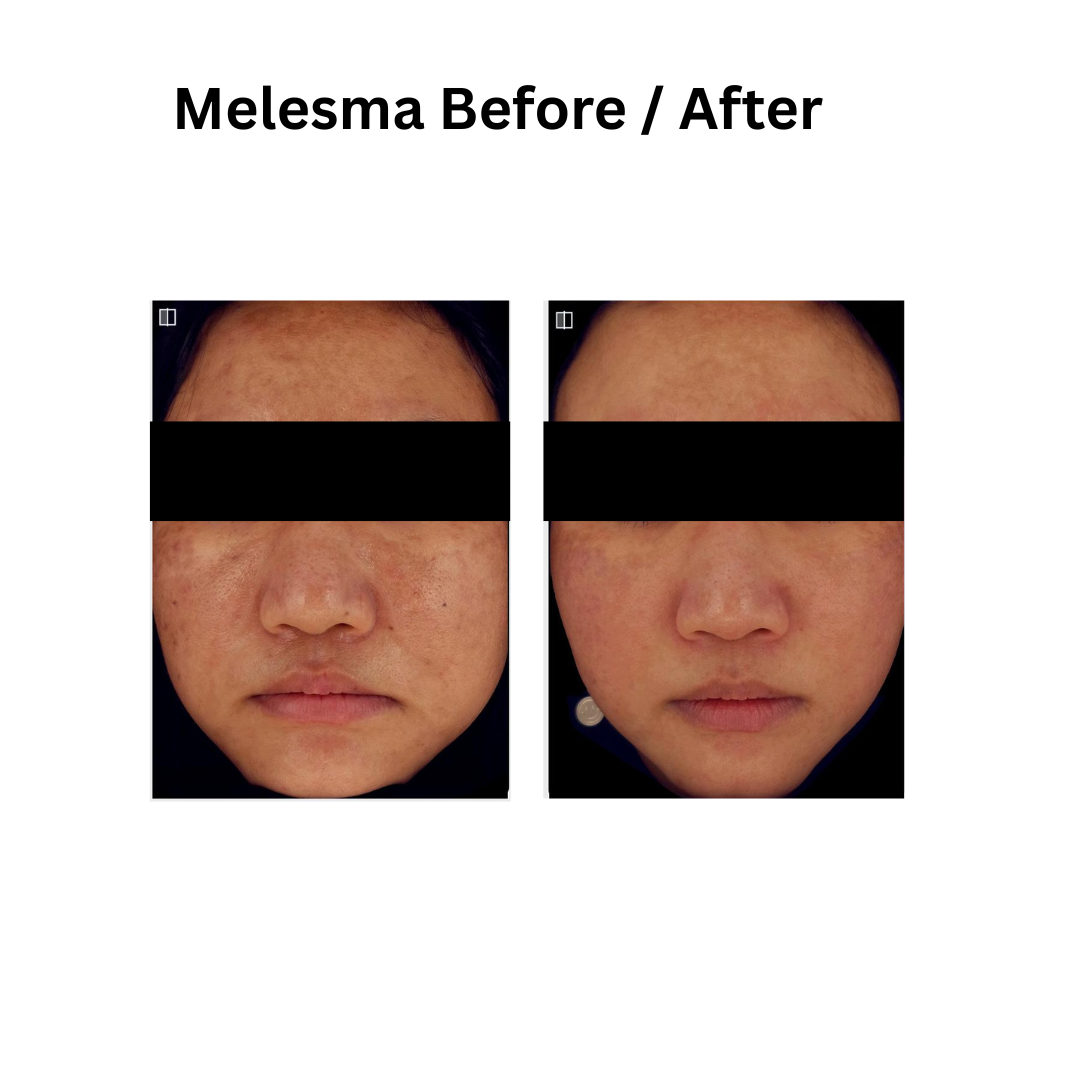
Our melasma treatment plans are built with caution and precision. We focus on pigment depth, skin sensitivity, inflammation risk, and maintenance needs so the skin can brighten gradually without pushing it into further irritation or rebound darkening.
Plans address melasma, uneven tone and visible dark patches. Approaches support pigment control without aggressive overload, with long-term sun protection and maintenance built into the plan.
Your Melasma (Chaya Poto) Treatment Journey
Consistent pigment improvement usually comes from careful treatment plus disciplined maintenance.
Consultation and Skin Mapping
We identify the pigment pattern, assess sensitivity, and talk through what may be triggering or worsening the concern.
Targeted Corrective Sessions
Based on your pigmentation pattern, skin sensitivity and treatment history, our dermatology team selects the most suitable treatment or combination. Your plan may include an in-clinic procedure together with topical or oral care when appropriate.
Maintenance and Protection
We help you maintain results with follow-up care, sun protection guidance, and trigger-conscious planning.
Melasma Treatments Available at Let Me In
Melasma can be influenced by sun exposure, hormonal changes, genetics and other individual triggers. We begin with a dermatologist consultation and select treatment according to your skin type, pigmentation pattern, severity, sensitivity and goals.
Brightening Peel
A dermatologist-selected brightening peel may help improve uneven pigmentation and support a brighter, more even-looking complexion. The type and strength are chosen according to your skin condition and sensitivity, following the same careful principles used for a clinical chemical peel treatment.
Mesotherapy
For selected patients, a mesotherapy plan may use tranexamic acid, PRP or GFC, or PN/PDRN. The option is selected according to your pigmentation concern, skin condition, medical history and the dermatologist’s assessment.
Laser Toning
Laser toning may be recommended for selected pigmentation patterns. The settings and expected schedule depend on your skin type, pigment depth and response.
Iontophoresis Treatment
Iontophoresis is used to enhance the absorption of selected depigmenting agents within a personalized pigmentation plan when it is considered suitable for your skin.
How Is a Melasma Treatment Selected?
There is no single treatment that suits every case. At Let Me In, we may combine an in-clinic procedure with prescribed topical or oral care, sun protection and follow-up.
- The location and pattern of pigmentation
- How deeply the pigment appears to be present
- Your natural skin tone and sensitivity
- Sun exposure and possible hormonal triggers
- Previous pigmentation treatments and skin reactions
- Current medicines and skincare products
- Whether the melasma is new, longstanding or recurring
- Your treatment goals and maintenance needs
What Results Can You Expect?
Melasma usually improves gradually rather than disappearing after one treatment. Depending on how long it has been present and how it responds, visible results may take roughly three to twelve months (American Academy of Dermatology).
Some patients require a series of sessions, and melasma can return after sun exposure, hormonal changes or interruption of maintenance care. We monitor your progress and may adjust the plan if your pigmentation or skin sensitivity changes.
Safety and Suitability
Before starting treatment at Let Me In, tell our dermatologist if:
- You are pregnant, planning pregnancy or breastfeeding
- You take prescription medicines, hormonal medicines or birth-control pills
- You have a history of blood clots or blood-clotting conditions
- You recently had a laser, peel, facial or injectable procedure
- You have active irritation, infection or open wounds
- Your pigmentation previously became darker after a procedure
- You have allergies or a history of sensitive-skin reactions
Temporary redness, dryness, mild swelling, peeling, irritation or increased sensitivity may occur, depending on the treatment. Peels and laser procedures require careful selection because unsuitable or overly aggressive treatment can worsen melasma or cause post-inflammatory pigmentation (DermNet).
Protecting Your Skin During Treatment
Procedures alone may not provide lasting improvement without consistent sun protection and maintenance. Your Let Me In plan may include advice to:
- Use broad-spectrum sunscreen every day and reapply when outdoors
- Wear a hat or seek shade during strong sunlight
- Avoid unnecessary heat and prolonged sun exposure
- Use prescribed pigmentation products as directed
- Avoid adding strong active ingredients without medical guidance
- Follow the aftercare instructions provided after each procedure
- Attend follow-up and maintenance visits when advised
We explain the preparation, relevant risks and aftercare for the specific treatment selected before you proceed.
Why Choose Let Me In For Melasma (Chaya Poto) Treatment
Melasma care requires patience, skin respect, and a strategy built around relapse prevention.
- Pigmentation-Focused Evaluation:
We examine what kind of pigment pattern you have so treatment is chosen with more accuracy and less guesswork. Pigmentation care is planned by MD dermatologists such as Dr. Bandana Jha.
- Advanced Brightening Technology:
We use modern treatment systems and corrective protocols designed to support tone improvement safely.
- Barrier-Friendly Planning:
Your plan is built to support the skin barrier and reduce the chance of rebound pigmentation from overtreatment.
Melasma Treatment Reviews From Let Me In Clients
Very very best. Quick and professional, I got melasma and skin brightening treatment done. It was the best skin care experience in Kathmandu, with service and friendly staff.
Read full review on GoogleI went through laser skin tag removal and melasma treatment and got the result at the very first time. Thanks to all Let Me In team for your warm hospitality.
Read full review on GoogleI really like the treatment that I did for my melasma. Thank you so much.
Read full review on GoogleI have done treatment for my melasma which is called meso. I have also used Korean products. Result is really amazing, and the staff made me feel comfortable throughout the process.
Read full review on GoogleI have done treatment for my melasma which was called Meso and I really like the results. I have also taken a Plapass B1 package and am excited for my next treatment.
Read full review on GoogleI really got a great experience here. I was getting rid of my melasma since my past days. I consulted with the doctor, she prescribed medicines and treatments, and I am surprised by the result.
Read full review on GoogleHospitality is wonderful. I have been here for my melasma treatment. The product and treatment suggested by Dr. Bandana has shown amazing result. I am really satisfied.
Read full review on GoogleI recently visited Let Me In for my melasma treatment. The product and medicine suggested by the doctor has shown amazing result. Counselling is also very good.
Read full review on GoogleI was truly depressed due to wrinkles and melasma problems on my face. Within a few visits I started regaining my previous skin.
Read full review on GoogleI have done carbon peel facial for my melasma. My experience was good and the staff are very kind and humble.
Read full review on GoogleI did melasma treatment and have felt such a good result. I am very happy to have treatment here.
Read full review on GoogleI came here for melasma and skin brightening treatment. I had such a wonderful experience and loved the result.
Read full review on GoogleFrequently Asked Questions
Why is melasma harder to treat than regular dark spots?
Melasma is often influenced by hormones, sun exposure, heat, and inflammation, which makes it more likely to return and more sensitive to aggressive treatment. If your pigment is lighter or more surface-level, laser toning or LaseMD may be discussed after assessment.
Can melasma be permanently cured?
It is better thought of as a condition that can be managed and improved. Many clients see visible correction, but maintenance is often important.
Is sun protection really necessary after treatment?
Yes. Sun exposure can quickly worsen pigmentation and reduce the benefit of treatment, so daily protection is a major part of the plan.
How many sessions will I need?
The number of sessions varies with the depth and severity of pigmentation, the procedure selected and how your skin responds. Our dermatologist will discuss the expected schedule after assessing your skin.
How soon will I see improvement?
Melasma treatment is gradual. Some patients notice changes during their treatment course, while longstanding or deeper pigmentation can require several months of consistent treatment and maintenance.
Can melasma return after treatment?
Yes. Melasma can become visible again after sun exposure, hormonal changes or interruption of maintenance care. Daily sun protection and follow-up care can help preserve improvement.
Is tranexamic acid suitable for everyone?
No. Suitability depends on how it would be used and your medical history. Tell our dermatologist about your medicines and any personal history of blood clots or blood-clotting conditions before a tranexamic-acid-based treatment is considered.