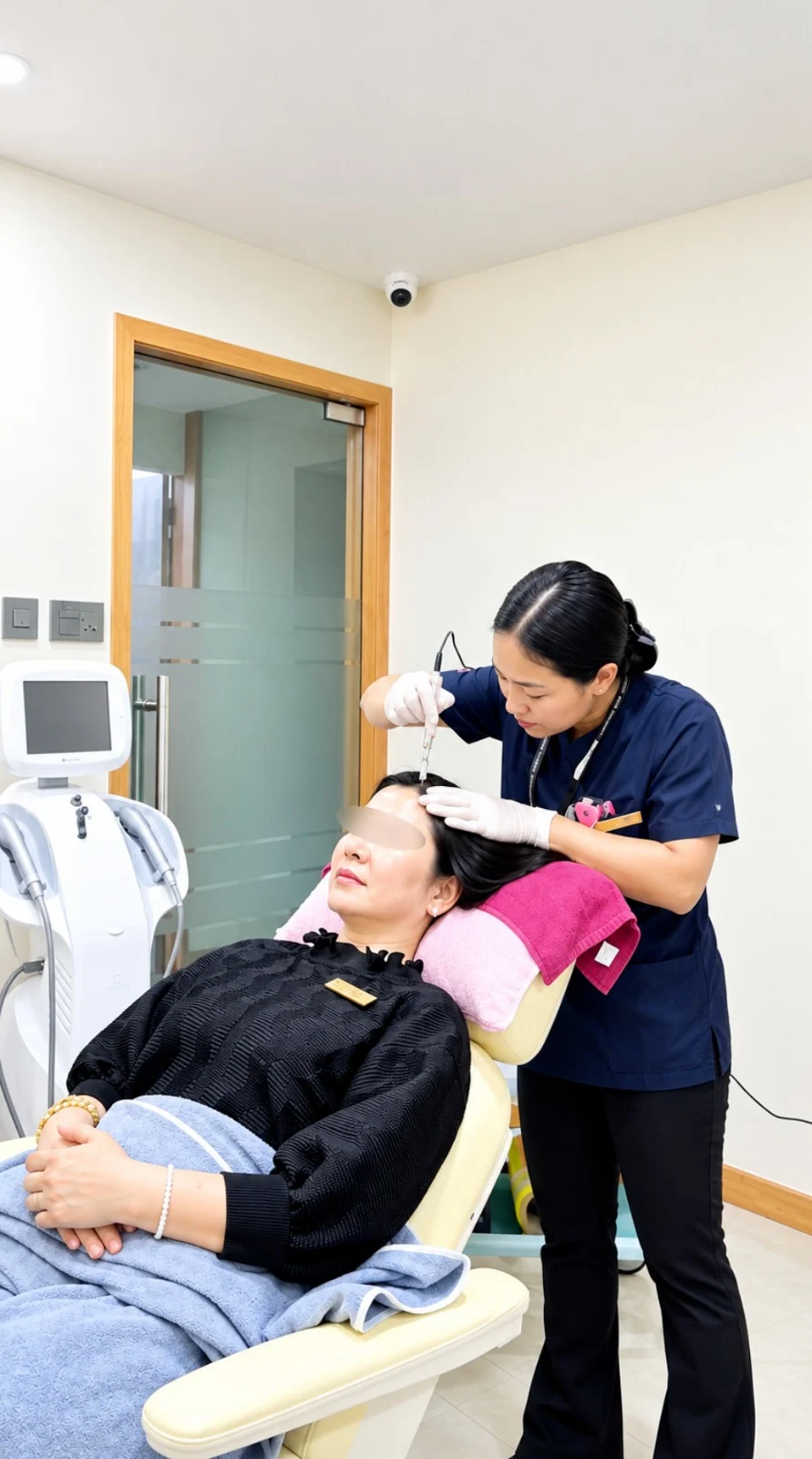



At a glance
- GFC stands for Growth Factor Concentrate and involves scalp injections.
- A diagnosis comes first: not every type of hair fall needs GFC.
- We explain the preparation, session plan and follow-up before treatment.
- Results are not guaranteed, and ongoing hair-loss care may still be needed.
What is GFC hair treatment?
GFC is a blood-derived treatment intended to support hair growth in thinning areas. Platelets in your blood contain growth factors: proteins involved in cell signalling and tissue repair. A GFC preparation system releases and collects these factors, and the prepared solution is injected into the scalp.
The aim is to improve the growth and appearance of existing hair. It cannot be relied on to restore lost follicles in a completely bald or scarred area. GFC is non-surgical, but it still involves a blood draw and injections, with the discomfort and risks those procedures can bring.
Why does the preparation method matter?
GFC is not one identical preparation used everywhere. The kit, platelet activation and processing method can differ. These differences matter when comparing treatment plans or interpreting a study. A claim about one preparation does not automatically apply to another.
At your consultation, we discuss the proposed preparation and whether any other treatment has a role in your plan. Microneedling or prescribed medicines may be discussed separately; they are not automatically part of every GFC appointment.
Could GFC help your type of hair loss?
We first assess what is causing your thinning or shedding. GFC has been studied in androgenetic alopecia, also called pattern hair loss. It may be considered for selected patients, but noticing more hair in the shower does not, on its own, tell you that GFC is the right treatment.
| What you are noticing | What the assessment needs to establish |
|---|---|
| A widening part, thinning crown or receding hairline | Whether this is pattern hair loss, its extent and whether GFC or another treatment could contribute to your plan. |
| Increased shedding after illness, childbirth or weight loss | Whether there is a temporary trigger, a nutritional or medical issue, or more than one cause. Some shedding improves as its trigger resolves. |
| Bald patches, soreness, scaling or a changing scalp | Whether an inflammatory condition, infection or another diagnosis needs treatment before a hair-growth procedure is considered. |
| Long-standing extensive loss or scarring | What improvement is realistic and whether another approach would be more useful. GFC cannot guarantee restoration of lost follicles. |
What should you discuss at the consultation?
Explain when the change began, whether it was sudden or gradual, and any scalp symptoms. Bring details of medicines, supplements, previous hair treatments and relevant medical reports. Your history and scalp examination guide whether blood tests or further investigation would help; the same tests are not necessary for every person.
An assessment for hair-loss treatment can also identify when medicines, treatment for a scalp condition or monitoring are more appropriate than an injection course.
What happens during a GFC appointment?
The exact preparation and timing depend on the treatment system and the area being treated. Before treatment, we talk through the intended benefit, alternatives and who will carry out your procedure.
-
Assessment and treatment discussion
We review your diagnosis, scalp condition, health history and goals, then explain the expected benefits, limitations, risks and how we will review your response.
-
Blood collection and preparation
A blood sample is collected and processed using the selected GFC system. Preparation involves releasing growth factors from platelets and separating the solution for treatment. Blood volume and processing time vary by preparation; we explain the appointment plan beforehand.
-
Scalp injections and comfort measures
The prepared solution is injected into the selected areas. Tell the clinician if you are anxious about needles or have reacted to an anaesthetic before. We discuss suitable comfort measures, although injections can still sting or feel uncomfortable.
-
Aftercare and follow-up
We explain scalp care, when to resume your usual products and activities, and how to contact us with a concern. We also discuss the next appointment and review point.
What results can you reasonably expect?
The intended changes may include less shedding or an improvement in hair thickness and coverage. These are different outcomes: losing fewer hairs does not necessarily mean that a thinning area has regained density. Hair growth takes time, and the response varies between people.
What does the research show?
Small studies have reported improvement in people with pattern hair loss, but the evidence does not support a guaranteed success rate or permanent result. A 2024 GFC study followed just five men over a short treatment period, without a comparison group. Its findings cannot predict what an individual patient will achieve.
A 2026 randomized study comparing GFC and PRP did not find a statistically significant difference in its main hair measurement when both treatments were used alongside topical minoxidil. Participants receiving GFC reported less pain in that study. The small sample and short follow-up do not establish that the treatments are equivalent or show what GFC alone would achieve.
How can you judge your own progress?
We discuss how progress will be assessed before you start treatment. Comparable photographs can help, particularly when lighting, hairstyle, angle and scalp area are kept consistent. A clinician may also assess the scalp more closely with magnification. Record other treatments used during the same period so any improvement is interpreted in context.
If photographs are used to explain results, they should identify the treatment period and any additional care. A before-and-after image is one person's experience, not a promise of the same outcome for you.
How many GFC sessions will you need?
There is no single session count that suits every diagnosis or preparation system. Published studies use different schedules, and an initial treatment plan is not a guarantee that a particular number of visits will produce visible regrowth. We discuss the proposed intervals and review point before treatment begins.
- Before the course: establish what change is being targeted, how it will be assessed and what other treatment is part of the plan.
- At review: discuss shedding, visible thinning, scalp symptoms, side effects and whether the time and cost remain worthwhile.
- Before further sessions: decide whether to continue, adjust treatment or reconsider the diagnosis if the response is limited.
Will you need maintenance?
Pattern hair loss can continue over time. If treatment helps, your clinician may discuss ongoing medical care or further procedures, depending on your response. Maintenance should be an individual decision with a clear purpose, rather than an automatic commitment to indefinite injections.
What does GFC hair treatment cost in Nepal?
We discuss the proposed cost at your hair consultation, including what is covered by each appointment. We explain the proposed course and follow-up as part of your individual treatment plan.
What side effects and risks should you understand?
Blood collection and scalp injections can cause discomfort, tenderness, redness, swelling, small amounts of bleeding or bruising. Using your own blood does not make the procedure risk-free: infection is a possible complication of injections, and reactions to an anaesthetic or another material can occur.
Tell the clinician about bleeding or platelet disorders, medicines that affect clotting, previous reactions, scalp infections and other medical conditions. Also mention pregnancy, breastfeeding or plans for pregnancy. These details help us decide whether to proceed, postpone treatment or suggest another option.
We explain the procedure and how to reach the team with treatment-related concerns. Small studies that report few complications cannot rule out uncommon risks or establish safety for every patient group.
How should you prepare and care for your scalp afterwards?
Before your appointment
Share your complete medicine and supplement list, including blood thinners, and follow the clinician's preparation instructions. Do not stop a prescribed medicine on your own. Let the clinic know if you develop a scalp rash, infection or a new illness before the appointment.
After the injections
Follow the written instructions for your procedure. We explain when you can wash your hair, exercise, use styling products and restart any topical hair-loss medicine. These timings should come from the treating clinician rather than a general schedule found online. Avoid unnecessary rubbing or scratching of the treated scalp.
When should you contact the clinic?
Contact the treating clinic promptly if pain, redness or swelling is worsening, if you notice discharge, or if you develop a fever. Seek urgent medical help for difficulty breathing or swelling of the face or throat. Keep the clinic's aftercare contact details available so that you know where to ask for advice.
How does GFC fit alongside other hair-loss treatments?
PRP hair treatment also uses a preparation from your own blood, but its preparation differs from GFC. Neither should be selected simply because it is described as newer or more concentrated. The diagnosis, protocol, evidence, comfort and overall cost all matter when comparing PRP and GFC.
Medicines may have an important role in managing pattern hair loss, whether or not you have injections. Other causes may need treatment for an underlying illness or scalp condition. GFC does not replace that care, and you should not discontinue prescribed hair-loss treatment without discussing the plan.
A hair transplant assessment considers a different approach: moving hair from a donor area to improve coverage elsewhere. It has its own suitability requirements. Having GFC does not mean that you will inevitably need a transplant, or that surgery can always be avoided.
Meet our dermatologists for hair and scalp care
Tell our team that you are booking for hair loss so we can arrange an appropriate consultation.

Dr. Kiran Sanjel
Dermatologist · New Baneshwor and Maharajgunj
Consultations for skin and hair concerns, with care planned around your assessment.
View Dr. Kiran's profile →
Dr. Rosina Paudel
Dermatologist · Maharajgunj
Dermatology and hair restoration care, with fellowship training in hair transplant and aesthetic dermatology.
View Dr. Rosina's profile →Where can you book a hair consultation?
Visit us in Kathmandu or Pokhara. Our team will confirm your appointment and any arrangements for treatment or follow-up.


Common questions about GFC hair treatment
Is GFC a permanent cure for hair loss?
No permanent result can be promised. The underlying cause of hair loss may remain active even if treatment improves shedding or thickness. We review any benefit with you and discuss whether ongoing care is appropriate.
Can women have GFC treatment?
GFC has been studied in both men and women with pattern hair loss, but suitability depends on the diagnosis and medical history. Shedding after childbirth is not automatically an indication for GFC. Mention pregnancy or breastfeeding during the assessment.
Is GFC painful?
Scalp injections may sting and leave temporary tenderness. Comfort measures can help, but a completely pain-free experience should not be promised. Tell the clinician about needle anxiety and previous reactions to numbing medicines before treatment.
Can I continue minoxidil while having GFC?
GFC may be used alongside prescribed hair-loss treatment. We discuss whether your current medicine should continue and when to apply it around each appointment. Do not assume that injections replace minoxidil or that every combination is suitable for you.
Does GFC hair treatment require a shaved head?
Scalp injections can be performed between existing hairs, so a full head shave is not generally needed. We explain the preparation needed for your treatment area before your appointment.
Is hair GFC the same treatment as a GFC skin booster?
Both names refer to blood-derived preparations, but the treatment area, purpose and clinical plan differ. This page concerns scalp treatment for hair loss. Tell the team that your consultation is for hair so that the assessment and advice address that concern.