


At a glance
- Start with the cause of your hair loss before comparing injections.
- PRP and GFC preparations vary; the treatment name alone is not a specification.
- Direct research does not establish that GFC is better for everyone.
- Compare the full course, progress reviews, discomfort and ongoing care.
What is the difference between PRP and GFC?
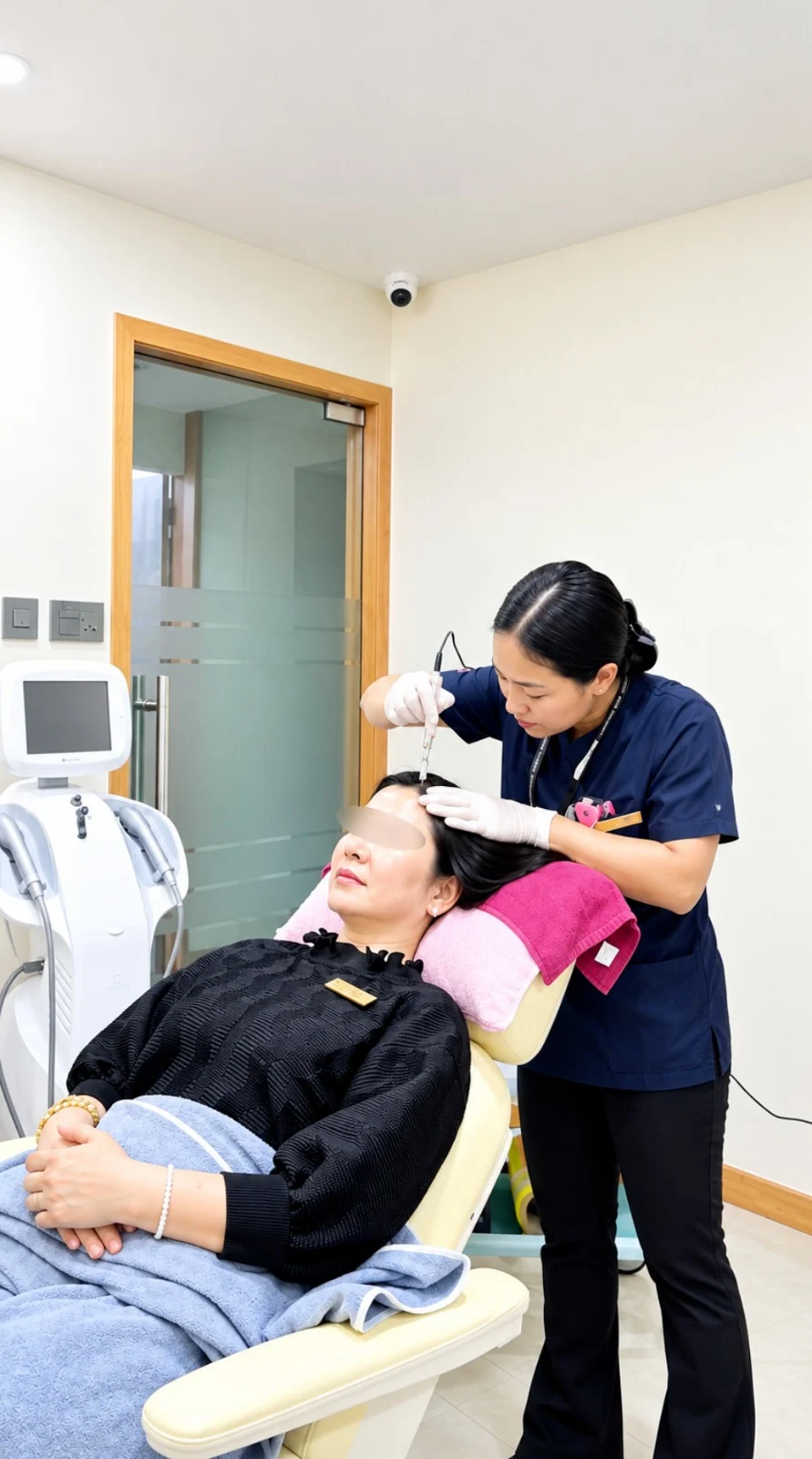
Platelet-rich plasma (PRP) contains platelets concentrated from a blood sample. Platelets release growth factors, which are proteins involved in cell signalling and repair. Growth factor concentrate (GFC) generally refers to a preparation made by activating platelets and collecting the released growth factors. The exact contents depend on the system used.
| Consideration | PRP | GFC |
|---|---|---|
| Preparation | Blood is processed to collect a platelet-rich portion of plasma. | A system is used to activate platelets and collect released growth factors. |
| What can vary? | Platelet concentration, other blood cells, activation and injection technique. | Kit, activation method, final composition and injection technique. |
| Evidence | Studied in several hair-loss trials, with differing protocols and results. | Direct comparisons with PRP are limited and apply to specific preparations. |
| Discomfort | Blood collection and scalp injections can cause discomfort. | Also involves blood collection and injections; less pain in one trial does not mean painless treatment. |
| Sessions and review | A repeated course and later maintenance may be proposed. | A repeated course may also be proposed; fewer visits are not guaranteed. |
| What to compare in a quote | The planned course, treatment area, reviews and additional care. | The same items, including the specific preparation being offered. |
A claim such as “more concentrated” describes a preparation, not a guaranteed improvement in hair growth. We look at patient outcomes as well as how the treatment is prepared.
Does research show that GFC works better than PRP?
We do not recommend GFC simply because it is newer. Direct comparisons are limited, and the preparation, other medicines and way results are measured can change what a study tells us.
What a direct comparison found
A 2026 randomized trial enrolled 44 people with pattern hair loss. It compared a specific GFC kit with a double-spin PRP preparation. Both groups received three monthly injection sessions and also used topical minoxidil.
The researchers did not find a statistically significant difference between the groups in the final ratio of thicker to finer hairs, their main hair measurement. People in the GFC group reported less pain and higher satisfaction. That makes comfort a relevant discussion, but it does not establish better hair growth with every GFC system.
The study was small, follow-up after the course was short, and there was no group using minoxidil alone. It cannot show how much benefit came from the injections, prove that the treatments are equivalent, or establish which lasts longer. The researchers also disclosed that the GFC kits were supplied for the study.
PRP research is not automatically GFC evidence
A small placebo-controlled PRP study reported improved hair measures, while another randomized pilot study did not find a hair-growth benefit from its PRP protocol. Neither compared PRP with GFC. We consider these differences when discussing your treatment plan and realistic expectations; not every blood-derived preparation produces the same result.
Who should consider PRP or GFC for hair loss?
Much of the research discussed here concerns androgenetic alopecia, also called male or female pattern hair loss. It cannot be applied automatically to sudden shedding, patchy loss or an inflamed scalp. A hair-loss assessment helps establish whether either procedure has a useful role in your care.
When the diagnosis changes the choice
- Gradual pattern thinning: the discussion may include medicines, an injection treatment or a combination, depending on your examination and goals.
- Shedding after illness, childbirth or another trigger: recovery or treatment of the underlying problem may be more relevant than choosing an injection.
- Patchy loss, soreness, scaling or scarring: these need a diagnosis and appropriate treatment rather than an assumption that PRP or GFC will address the cause.
The American Academy of Dermatology's guidance explains why finding the cause comes first and why some hair loss can improve without a procedure. Age, sex or a photograph alone cannot determine which injection, if any, is suitable.
What if there are established bald areas?
Neither treatment can guarantee a full head of hair. An assessment considers the pattern and extent of loss, scalp health and realistic coverage. A hair transplant assessment addresses a different question: whether moving follicles from a donor area is appropriate. An injection course does not replace that assessment or make surgery suitable for everyone.
Why does the preparation method matter?
Two clinics can use the same treatment name while preparing different products. With PRP, the separation method, platelet concentration, blood-cell content and activation can differ. With GFC, the kit and activation process affect the product collected for treatment.
The amount injected, scalp area treated and delivery technique also matter when comparing plans. The number of tubes or a manufacturer's description cannot, by itself, tell you which option will work better. Evidence for one preparation should not be presented as proof for a different system.
Similarly named treatments are not necessarily interchangeable. GFC, PRF, preparations described as CGF, and other growth-factor products should not be assumed to have the same composition or evidence. We explain the proposed preparation and whether other treatments are part of your plan.
Is GFC less painful, and is recovery different?
Both approaches involve a blood draw and treatment of the scalp with needles. Discomfort varies with the preparation, injection technique, area treated and pain relief used. Lower pain scores with one GFC protocol are encouraging, but they are not a guarantee that your treatment will be painless.
Temporary tenderness, redness, swelling, bruising or minor bleeding can occur with scalp injections. Using your own blood does not make a procedure free of risk. Preparation and administration still require appropriate clinical care.
Returning to daily activities and following aftercare are separate issues. Even when a visit does not require time off work, you may have instructions about washing, hair products, exercise or other scalp treatments. Follow the instructions for your procedure, and contact the treating team about symptoms that are worsening or unexpected.
Before either treatment, we review your medicines and supplements, bleeding or platelet disorders, scalp infections, previous reactions, pregnancy and breastfeeding. These can affect assessment and planning. Do not stop or change prescribed medication on your own.
Will GFC need fewer sessions or give faster results?
That cannot be assumed from the name. The direct trial described above used the same number of sessions in both groups; it was not a test of whether GFC could achieve the same benefit with fewer visits. A clinic's suggested schedule is a treatment plan, not proof of superiority.
Separate appointments from the time needed to assess change
A course may finish before its effect on visible hair growth can be judged. Less shedding, thicker individual hairs and better overall coverage are different outcomes. We agree on the changes to review and when to assess them; we do not promise visible regrowth after a particular injection.
Review progress before extending the course
Comparable photographs use the same scalp area, lighting, angle and similar hair length and styling. Where appropriate, scalp measurements can add information beyond a photograph. Medicines and other treatments used during the course should be recorded because they can also affect the result.
Maintenance may be discussed if there is a useful response, but neither treatment should be presented as a guaranteed permanent cure. If improvement is limited, a review should consider the diagnosis, treatment response, side effects and alternatives before simply adding more sessions.
How should you compare PRP and GFC costs in Nepal?
Compare the proposed course rather than the price of one visit. The treatment area, number of sessions, consultation, progress reviews, any tests and additional treatments can affect the total. We explain what the proposed plan includes and whether later maintenance is appropriate. The PRP treatment and GFC treatment pages cover each option in more detail; an individual quote should follow your assessment.
How can you make a decision with your dermatologist?
-
Establish the diagnosis and goal
We discuss when your hair changes started, your health and previous treatments. Decide whether the immediate goal is managing shedding, treating a scalp problem or improving visible thinning. A procedure may not be the first step.
-
Compare the actual treatment plans
Consider the preparation offered, evidence relevant to your diagnosis, possible benefits, discomfort, risks and alternatives. Include any medicines or additional procedures in that comparison.
-
Agree on the commitment and review
We explain the proposed appointments and review point before treatment. Together, we discuss how progress will be assessed and what would lead us to continue, change or stop care.
Meet our dermatologists for hair and scalp care
Tell our team that you are booking for hair loss so we can arrange an appropriate consultation.

Dr. Kiran Sanjel
Dermatologist · New Baneshwor and Maharajgunj
Consultations for skin and hair concerns, with care planned around your assessment.
View Dr. Kiran's profile →
Dr. Rishna Malla
Dermatologist · Pokhara
Care for hair and scalp disorders, including hair-loss treatment and PRP therapy.
View Dr. Rishna's profile →Where can you book a hair consultation?
Visit us in Kathmandu or Pokhara. Our team will confirm your appointment and any arrangements for treatment or follow-up.



Common questions about PRP vs GFC for hair
Is GFC simply a stronger version of PRP?
It is more useful to think of them as different preparations. A higher concentration of a particular growth factor does not automatically mean better hair growth. The system, diagnosis and clinical evidence matter more than the word “stronger”.
Should I switch to GFC if PRP has not helped?
Review the diagnosis, course completed, time since treatment and any accompanying medicines first. Limited response to PRP does not establish that GFC will work. Switching may be discussed, but it should have a clinical reason and a new review plan rather than a promise of success.
Can I have PRP and GFC together?
Do not assume that combining or alternating them adds benefit. Evidence comparing one with the other does not establish that using both is better. Any combined plan needs a clear purpose, an explanation of the evidence and a way to judge whether the extra treatment is worthwhile.
Can either treatment replace my hair-loss medicine?
Not automatically. Medicines and procedures may have different roles in your plan, and some injection studies also use medicines. Discuss any proposed change with the prescribing clinician; an injection appointment is not a reason to stop treatment yourself.
Is one better for women than men?
The diagnosis and individual circumstances are more useful than a rule based on sex alone. Evidence from men with pattern hair loss cannot be assumed to describe postpartum shedding or every type of hair loss in women. Pregnancy, breastfeeding and other health factors also affect treatment planning.
Does adding microneedling make either treatment better?
Adding another procedure creates a different treatment plan. Evidence for scalp injections alone does not prove the benefit of that combination. If microneedling is considered, we explain its purpose, risks and aftercare before you decide.