


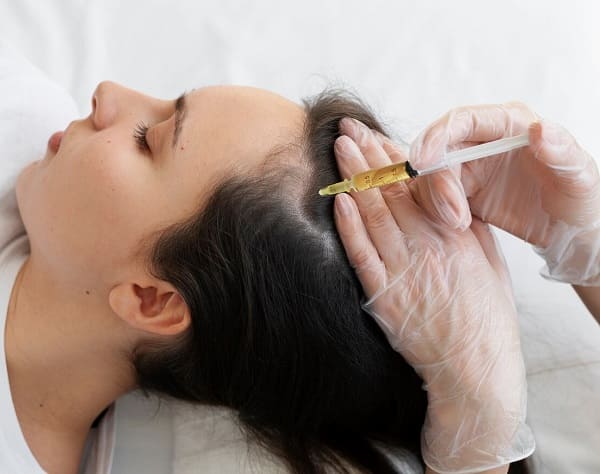
Not every hair concern needs surgery. Hair restoration can address thinning, shedding and reduced density while focusing on scalp health, circulation and follicle support. It can complement ongoing hair fall treatment or transplant planning.
Your Restoration Plan
Non-surgical hair restoration works best when it is monitored and adjusted over time.
Diagnosis and Goal Setting
We review what type of hair loss you are seeing and whether your goal is regrowth, fall control, or density maintenance.
Treatment Selection
If appropriate after assessment, the team may discuss PRP treatment planning or GFC treatment. Ask why a proposed option suits your diagnosis and how its response will be reviewed.
Review and Maintenance
We track visible response, refine your schedule, and recommend maintenance to preserve gains over time.
Why Let Me In For Hair Restoration
Consistency and early intervention can make a meaningful difference in non-surgical hair care.
- Targeted Clinical Assessment:
This page covers non-surgical care. If your goal is a surgical assessment, our hair transplant treatment and cost guide explains that separate pathway. Your clinician can help establish which approach fits your pattern of loss.
- Evidence-Guided Technology:
We use modern treatment tools and protocols chosen to support scalp health and follicle stimulation.
- Personalized Progress Tracking:
Your follow-up schedule is tailored to how your scalp and density respond over time.
What clients say about hair restoration at Let Me In
I was there for my hair treatment. I got good results after the treatment. Moreover, the staffs are so friendly. They offered me a free coffee.
Read full review on GoogleI had my first hair PRP session today and the experience was truly amazing. The team was incredibly gentle, professional, and made me feel comfortable throughout. The clinic has a calm Korean-inspired aesthetic that instantly relaxes you.
Read full review on GoogleFrequently Asked Questions
Who is a good candidate for non-surgical hair restoration?
People with early thinning, diffuse hair fall, or reduced density are often strong candidates, especially when follicles are still active.
How will my progress be reviewed?
Agree on a review point, what changes will be assessed and whether comparable photographs will be used. If response is limited, discuss the diagnosis and alternatives before extending a course.
How soon should I seek treatment for thinning hair?
Earlier is usually better. Addressing hair loss before it becomes advanced often gives you more treatment options and better response potential. You can also read our nutrition and hair loss guide for supportive care basics.